

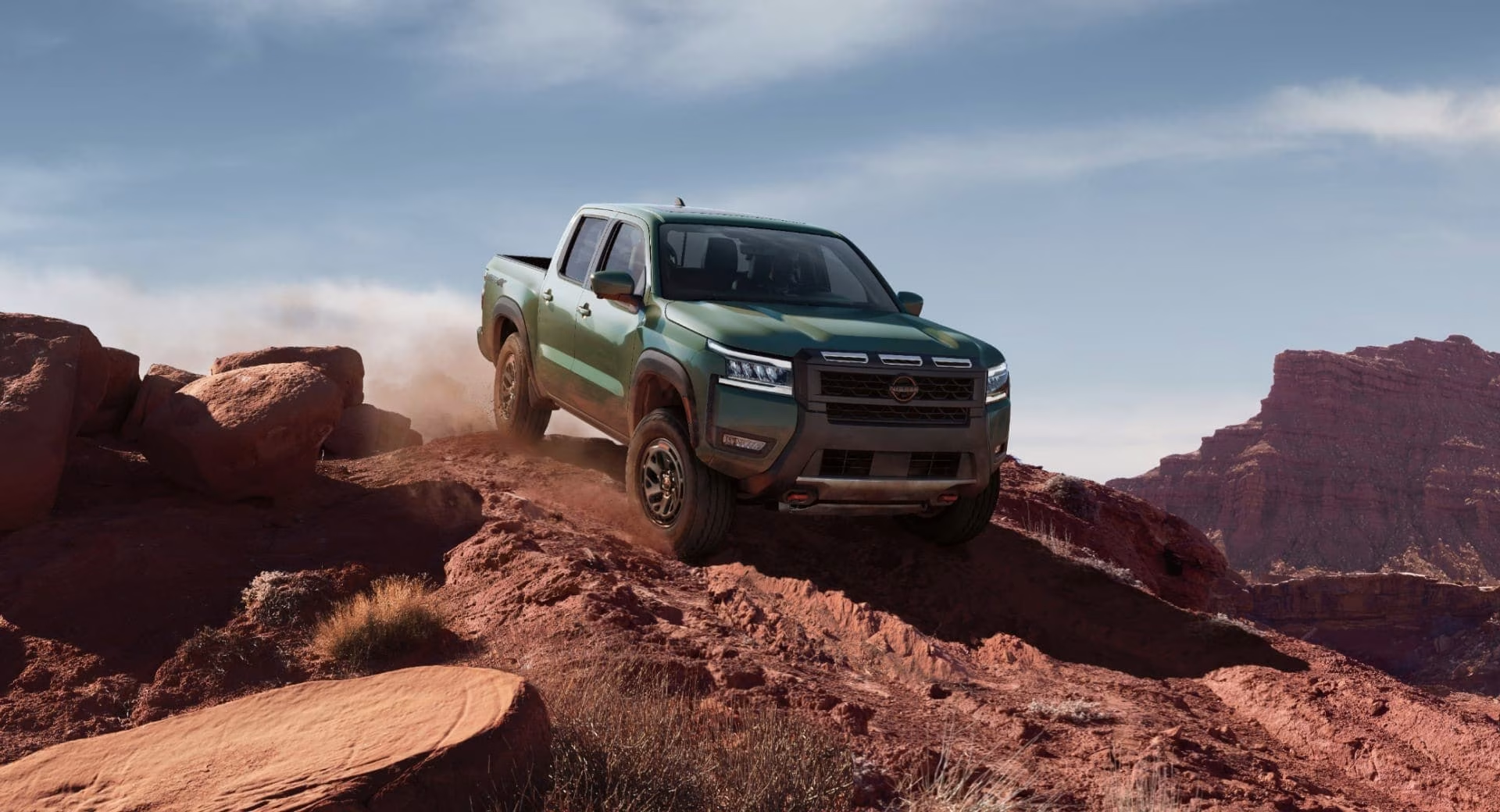
What a Nissan Frontier Owner Should Know About Snow Tires
Posted at Thu, Dec 24, 2026 1:00 PM
THE SHORT ANSWER
Snow tires matter more on a Nissan Frontier than many owners realize, because a pickup with an empty bed carries little weight over its rear tires. On a rear-wheel-drive trim they're the biggest winter upgrade you can make. On a 4WD trim they're what helps you stop and steer, not just get moving. Run a full set of four and mount them before the first hard freeze.
Winter on Long Island asks more of a pickup than most drivers expect. If you drive a Frontier, the rubber under it shapes your winter more than the drive system does. At Krishna Nissan in Greenvale, Frontier owners ask us about snow tires every fall, and these are the questions that come up most.
IN THIS POST
Why a Pickup Behaves Differently on Snow

A compact SUV spreads its weight fairly evenly from front to back, and a pickup doesn't. With the bed empty, most of the Frontier's heft sits up front under the hood, so the rear tires have less weight pressing them into the road. You'd never notice on dry pavement. On a slushy morning, though, that light rear end is what steps out when you ease onto the gas at a green light.
Power is part of the story too. Under the hood of any Frontier sits a 3.8 L 6-cylinder making 310 HP. That's a healthy amount of shove for a midsize truck, and more than enough to spin a tire that has nothing to bite into. Feathering the throttle helps, but it works around the problem without fixing it.
Grip comes from four small patches of rubber touching the road, and nothing else. Traction control, stability control and four-wheel drive can only manage the grip those tires deliver. They can't add any. That's why the tires you run from December through March matter more than almost any other winter decision you make about the truck.
Winter Tires Versus All-Season and All-Terrain

What makes a winter tire different
All-season tires use a rubber compound that stiffens as the temperature drops. By the time there's frost on your windshield, they've already lost some of their grip. Winter tires use a softer compound that stays flexible in the cold, along with deeper tread and wider grooves that push slush out of the way.
They also carry dense siping, which is many tiny slits cut across the tread blocks. On packed snow and ice, those slits act like extra biting edges. That's a big reason a winter tire stops shorter and holds a turn better on a frozen road.
To confirm a tire is built for winter, look for the three-peak mountain snowflake symbol on the sidewall. It means the tire passed a standardized snow traction test. An M+S (mud and snow) marking by itself is a manufacturer's label, not a test result.
What about all-terrain tires?
Plenty of truck owners run all-terrains, and their chunky tread can feel confident in deep, fresh snow. Ice and cold, packed pavement are another matter. Unless an all-terrain carries that mountain snowflake symbol, its rubber behaves much like an all-season once things freeze. Check the sidewall before you count on it for a Long Island January.
Rear-Wheel Drive or 4WD: Which Frontier You Have Changes the Stakes

Nissan builds the Frontier both ways, and the trim name tells you which one you have. Rear-wheel drive comes on the King Cab S (2WD), Crew Cab S (2WD), Crew Cab SV (2WD) and Crew Cab Long Bed SV (2WD). So does the Crew Cab PRO-X, which surprises some owners because of its rugged look. The S and SV trims marked (4WD) and every PRO-4X version can send power to all four wheels.
On a rear-wheel-drive Frontier
This is where winter tires earn their keep. All the power goes to the lightly loaded rear axle, so a set of all-seasons can leave you spinning at the bottom of an icy driveway. Switching to winter tires turns a frustrating truck into a perfectly usable one. Some owners also secure a few sandbags in the bed over the rear axle to put more weight back there.
On a 4WD Frontier
Four-wheel drive gets you moving, and that can build false confidence. It does nothing to help you stop or steer, and braking on ice is where most winter fender-benders start. Winter tires shorten your stops and keep the front end turning when the road gets slick.
Setting Up and Running Winter Tires the Right Way
A few habits separate owners who love their winter tires from owners who regret the purchase. Most of them come down to setup and timing.
- Buy four, never two. Mixing winter tires on one axle with all-seasons on the other upsets the balance, and the truck can spin or plow straight ahead in a slick turn.
- Mount them on a second set of wheels. Seasonal swaps go faster, and your everyday wheels stay out of the road salt.
- Plan for tire pressure sensors. A second set of wheels needs its own, or the warning light will stay on all winter.
- Check pressure often. Cold air contracts, so pressures drop as temperatures fall. Set them to the numbers on the label inside the driver's door jamb.
- Replace them before they're bald. Winter tires lose much of their snow grip well before the tread hits the legal minimum.
Timing matters as much as the tires themselves. Put them on once temperatures stay near freezing most days, which on Long Island usually lands around Thanksgiving. Take them off in spring after the cold snaps are behind you, because warm pavement wears that soft compound quickly. Mark your calendar and book service for both swaps so you aren't scrambling the week a storm hits the forecast.
Winter Driving Around Greenvale, and How We Can Help
Winters around here usually aren't weeks of deep snow. More often you get freeze-thaw cycles, wet nor'easters, and black ice on Route 25A and the side streets off Glen Cove Road early in the morning. Those are exactly the conditions where cold-weather rubber pays off, even on days the plows never come out. A salty, slushy commute on the Long Island Expressway rewards the same tires.
Krishna Nissan handles Nissan service and maintenance, so our technicians can mount and balance your winter set and check pressures. While the truck is in, they can also look over brakes and wiper blades, two other things you'll want working right in January.
Still choosing a Frontier?
If winter weighs heavily on your decision, drive a 2WD and a 4WD version back to back. Between the Crew Cab SV (2WD) at $36,490 and the Crew Cab SV (4WD) at $39,790, the price gap is real, and good winter tires close much of the snow-day difference. For owners who head upstate or out to rough roads in winter, 4WD still makes sense. You can book a test drive of either, and we also carry pre-owned vehicles if a used truck fits your plans better.
Where
235 Glen Cove Rd
Greenvale, NY
Call
KEY TAKEAWAYS
- Four-wheel drive helps you get moving in snow, but winter tires are what help you stop and turn.
- Rear-wheel-drive Frontier trims, including the Crew Cab PRO-X, gain the most from a full set of winter tires.
- Mount four winter tires on a second set of wheels and swap them with the seasons.
FAQ
Common questions
Do I need snow tires if my Frontier has 4WD?
For most Long Island winters, they're worth it. Four-wheel drive helps you accelerate on snow, but it doesn't help you brake or steer. Winter tires improve all three, especially on ice and cold, packed pavement.
Can I put winter tires on just the rear of a 2WD Frontier?
We don't recommend it. Running winter tires on one axle and all-seasons on the other leaves the truck with uneven grip, which can cause a spin or a slide straight ahead in a turn. Buy a full set of four.
When should I put winter tires on and take them off?
Mount them once daytime temperatures stay near freezing most days, which is often late November around Greenvale. Take them off in spring after the last cold snaps pass, since warm pavement wears the soft rubber quickly.
Are the tires on a Crew Cab PRO-4X good enough for winter?
Check the sidewall. If you see the three-peak mountain snowflake symbol, the tire passed a standardized snow traction test. If it only says M+S, plan on a dedicated winter set for icy months.
Let us take care of it
Book online in a minute and pick a time that works for you.
Or call (516) 621-2300 · 235 Glen Cove Rd, Greenvale